
Chris Marmier
Chris Marmier, an Amsterdam-based artist, creates storytelling artworks with a distinctive stroke and palette of colors.
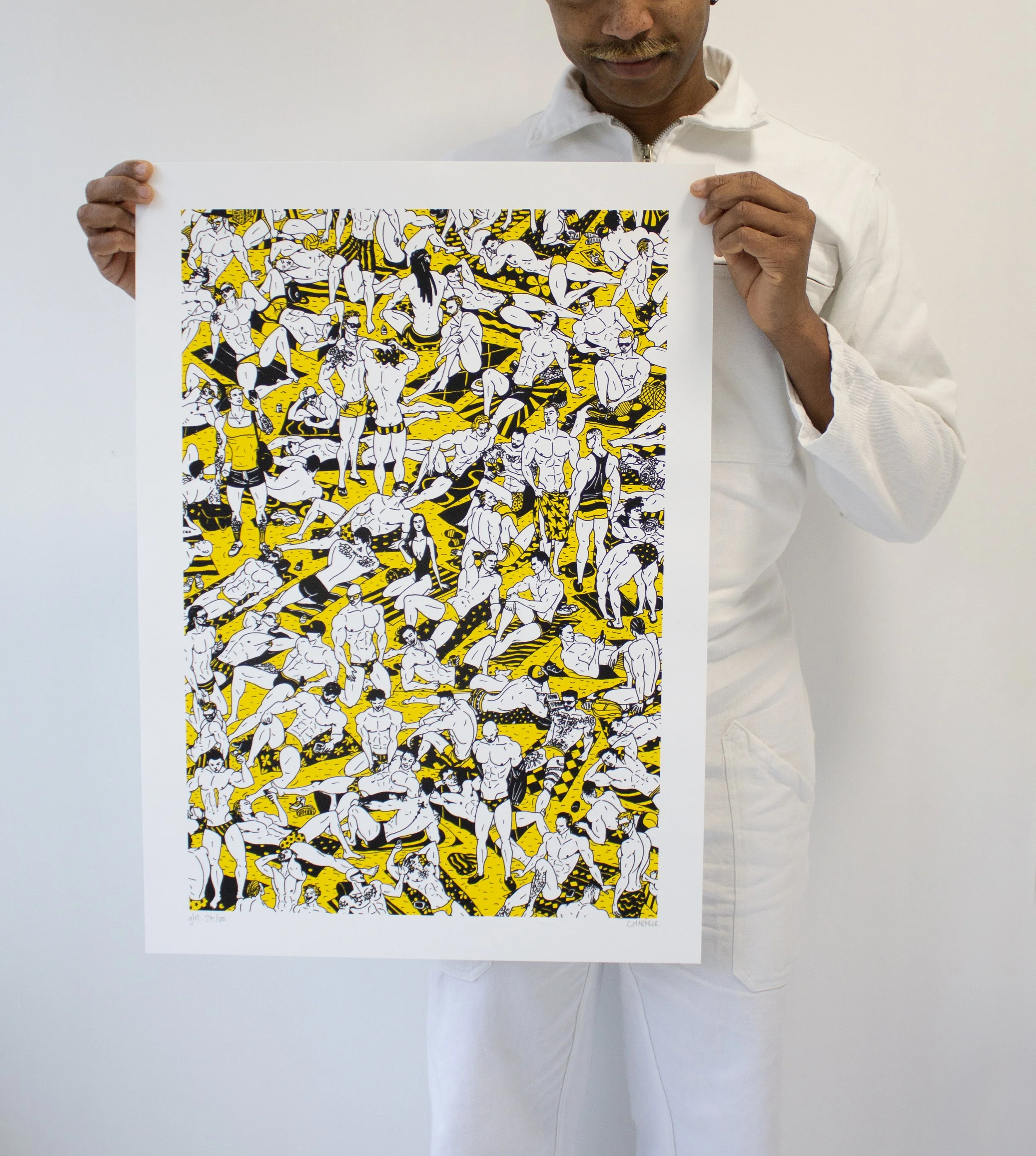
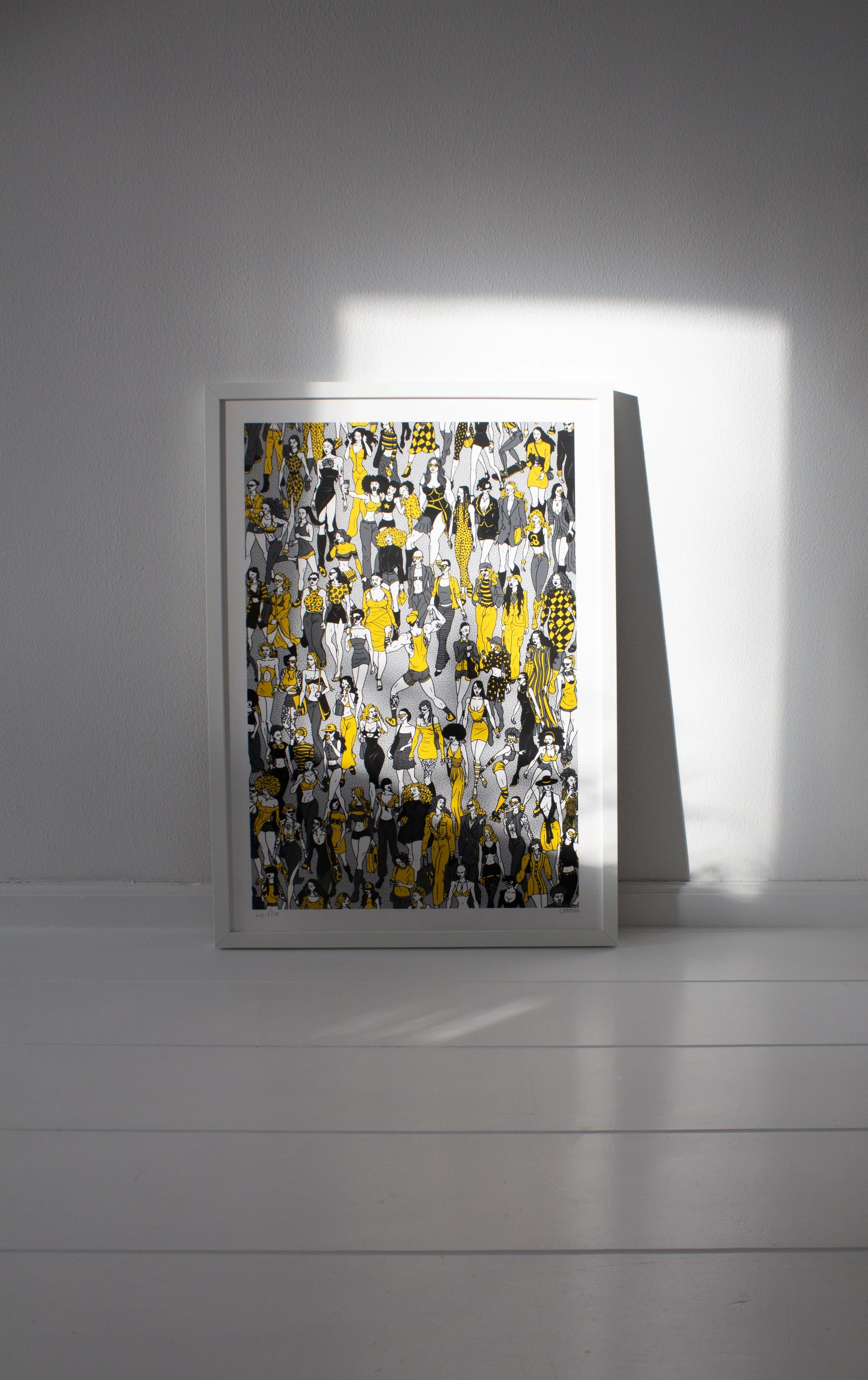
Coming from a bicultural family and shaped by life across multiple countries, his practice is rooted in close observation and reinterpretation of the world around him. His compositions often place human figures at their core, exploring themes of identity, nature, culture, and politics. Each piece invites the viewer to pause and reflect on the intricate details and deeper meanings.
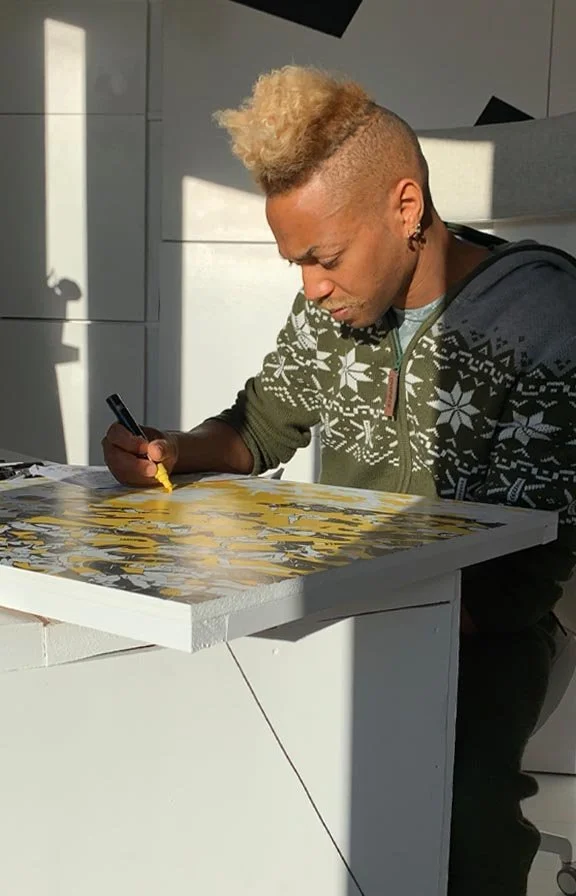
After studying visual communication, Chris began his career as a graphic designer all the while continuing to draw in his spare time. Since 2015, he has been exhibiting his richly detailed and colorful works in galleries. He creates his original pieces using acrylic ink on panel and also works digitally to produce his art prints.
Chris Marmier, an Amsterdam-based artist, creates storytelling artworks with a distinctive stroke and palette of colors.
Coming from a bicultural family and shaped by life across multiple countries, his practice is rooted in close observation and reinterpretation of the world around him. His compositions often place human figures at their core, exploring themes of identity, nature, culture, and politics. Each piece invites the viewer to pause and reflect on the intricate details and deeper meanings.
After studying visual communication, Chris began his career as a graphic designer all the while continuing to draw in his spare time. Since 2015, he has been exhibiting his richly detailed and colorful works in galleries. He creates his original pieces using acrylic ink on panel and also works digitally to produce his art prints.
THE ARTIST'S WORK
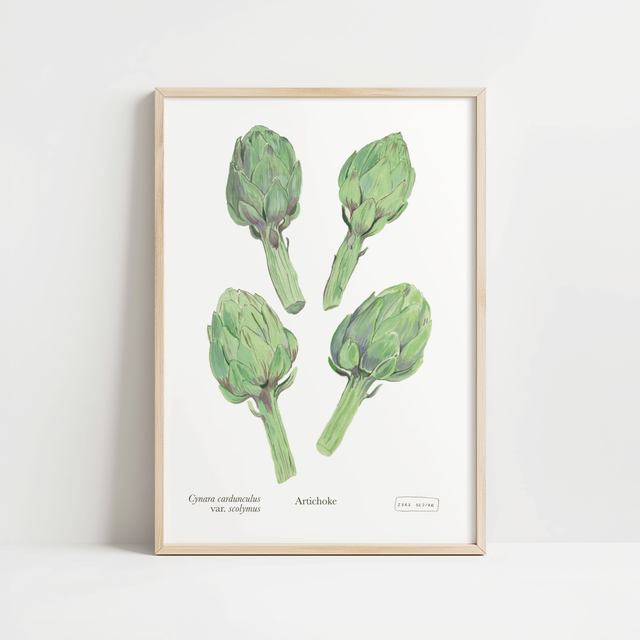
"Artichoke" — Zara Glaser 2025 Art print of an original gouache painting
The humble artichoke, given its moment.
Four artichokes, arranged with the quiet formality of a botanical study — Latin name and all. Cynara cardunculus var. scolymus, since you asked. Zara's gouache rendering gives them a warmth and solidity that elevates them well beyond the vegetable aisle, each one painted with the kind of careful attention that makes you see a familiar thing differently.
Part of Zara's ongoing botanical series, these prints sit beautifully in a kitchen, a dining room, or anywhere that deserves something considered on the wall without taking itself too seriously.
Details
A4 (21 × 29.7 cm)
Art print of an original gouache painting
Signed by the artist
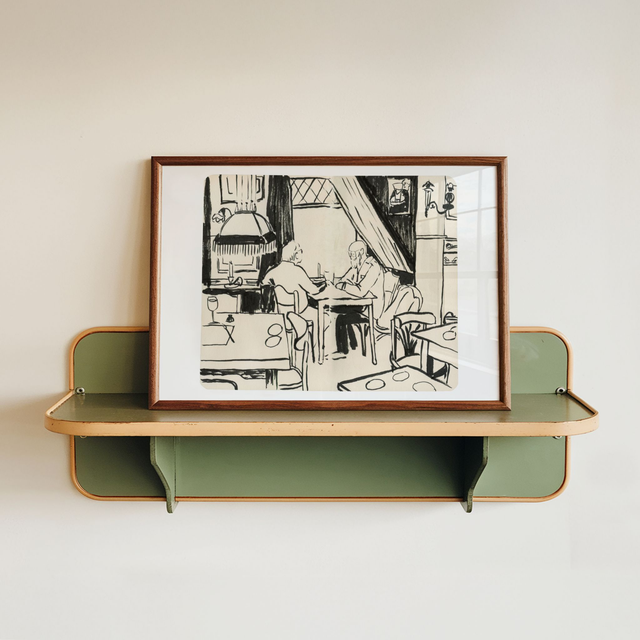
"Café de Eland" — Zara Glaser Art print of an original plein-air ink illustration
Some things are best drawn before the moment passes.
Zara drew this at the table, in real time, as the café moved around her. Two figures deep in conversation, the lamplight, the curtains, the quiet hum of a room doing what Amsterdam cafés do best — holding people together for a little longer than they planned.
Café de Eland is the kind of place that rewards a sketchbook. Old enough to feel settled, lived-in enough to feel honest. Zara's loose, confident ink line captures it without overworking it — the suggestion of a room, the weight of two people present with each other, the particular atmosphere of a good café on an ordinary evening.
Part of an ongoing series of plein-air ink illustrations drawn on location in Amsterdam's cafés, straight from the sketchbook to the wall.
Details
Available in A4 (21 × 29.7 cm) and A5 (14.8 × 21 cm)
Art print of an original ink illustration
Printed on 320gsm heavyweight textured paper
Hand signed and stamped by the artist
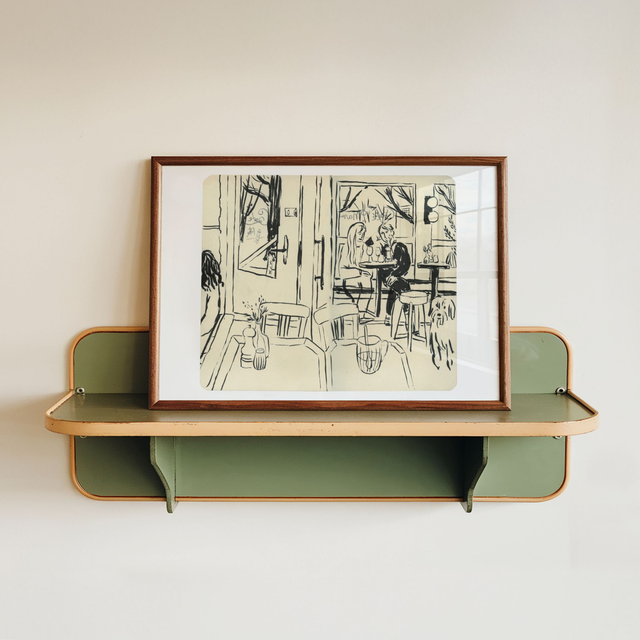
"Café Marcella" — Zara Glaser Art print of an original plein-air ink illustration
The afternoon has nowhere else to be.
A figure alone at a table, a glass of wine, bare branches visible through the window, stools tucked neatly along the bar. Café Marcella, drawn from life — Zara's ink moving quickly and confidently across the page, catching the light, the space, the particular stillness of a café in the quieter part of the day.
There's a looseness to these drawings that no photograph could replicate. The lines that suggest rather than describe. The way a room becomes itself in just a few strokes. Drawn on location, straight from the sketchbook — the moment preserved exactly as it felt.
Part of Zara's ongoing series of plein-air ink illustrations of Amsterdam's cafés.
Details
Available in A4 (21 × 29.7 cm) and A5 (14.8 × 21 cm)
Art print of an original ink illustration
Printed on 320gsm heavyweight textured paper
Hand signed and stamped by the artist
"Bos en Lommer" — Zara Glaser Art print of an original gouache painting
Not every beautiful view comes with a postcard.
Bos en Lommer doesn't feature on the usual Amsterdam highlights. No canals, no gabled houses, no crowds. Just a quiet street, a row of bare pollard willows catching the last warmth of the day, and a corner building with its top floor glowing gold against a pale blue evening sky. A half moon already up. The road ahead empty and unhurried.
This is the Amsterdam that people who actually live here know — the neighbourhoods walked daily, the familiar streets that reveal themselves slowly, view by view. Zara painted this view near her home, on one of those winter walks with her little dog when the light does something unexpected and you find yourself standing still, just looking.
Rendered in her characteristic gouache style, soft and warm and utterly unshowy, it's a piece that feels like a deep breath.
Details
Available in A4 (21 × 29.7 cm) and A5 (14.8 × 21 cm)
Art print of an original gouache painting
Signed by the artist