 Image 1 of 3
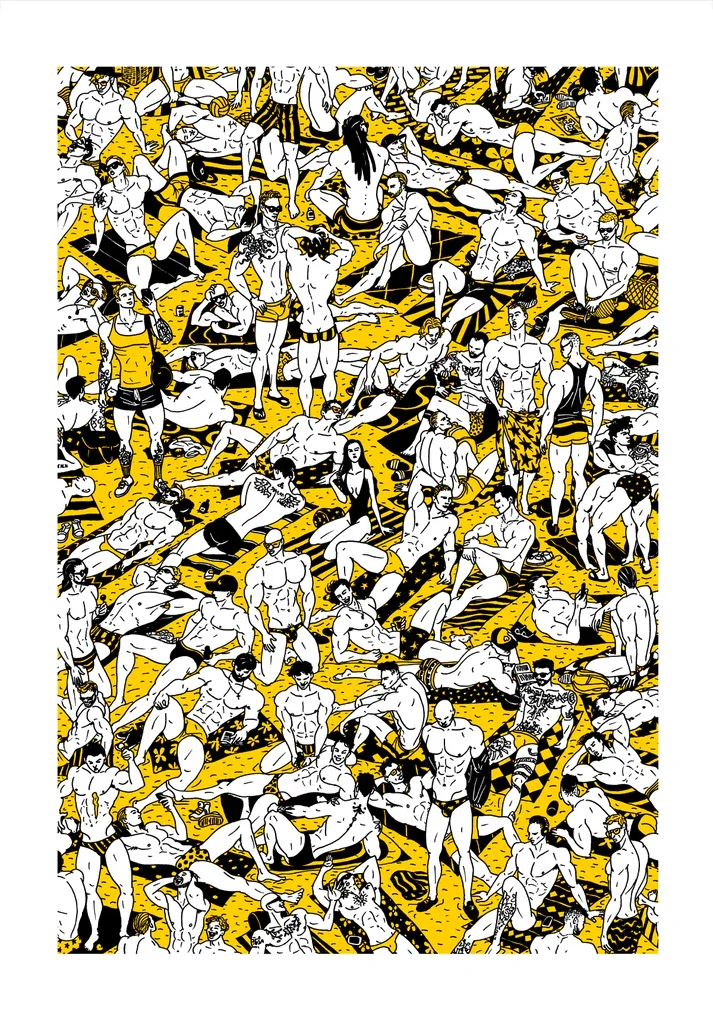 Image 2 of 3
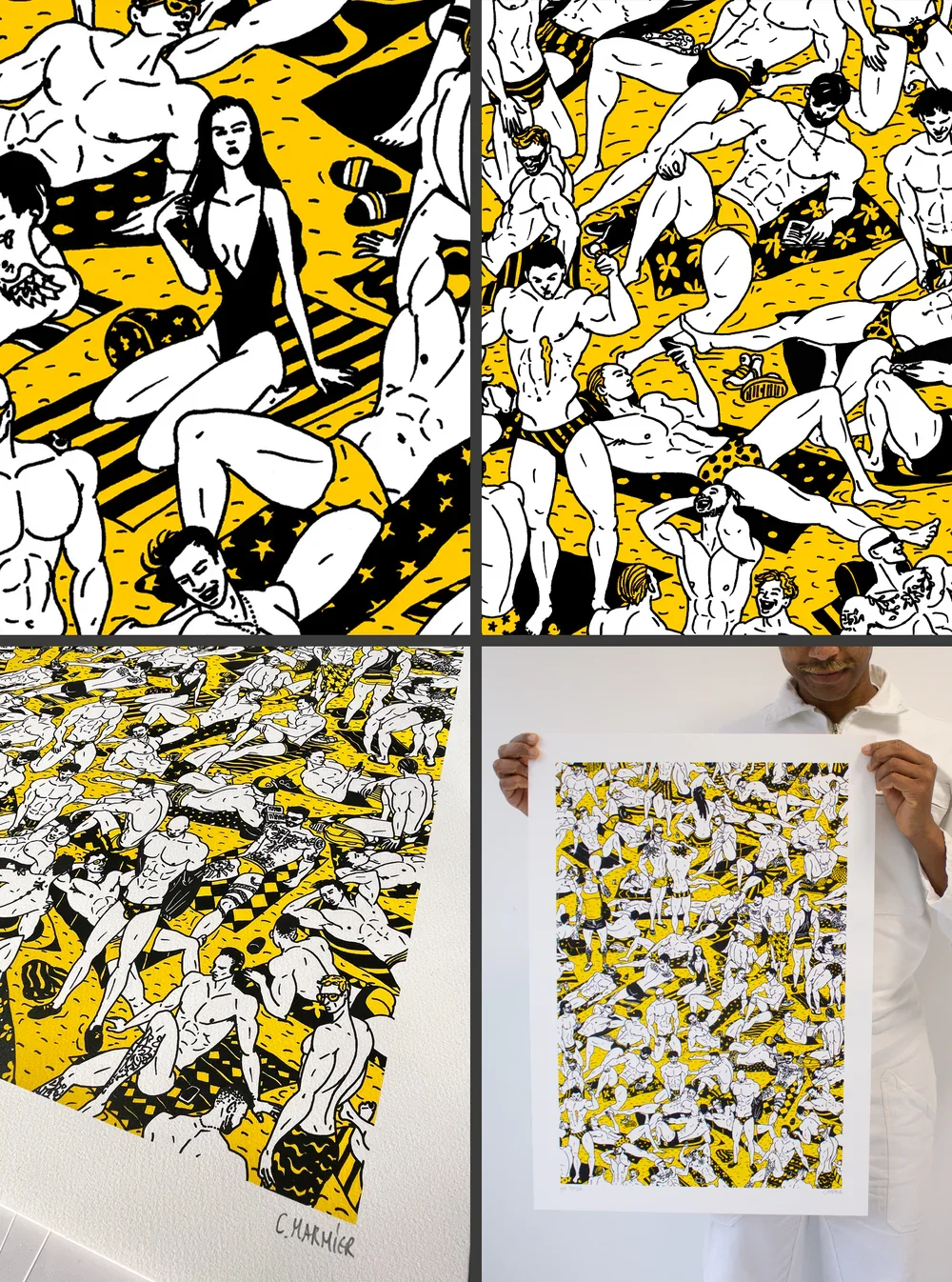 Image 3 of 3
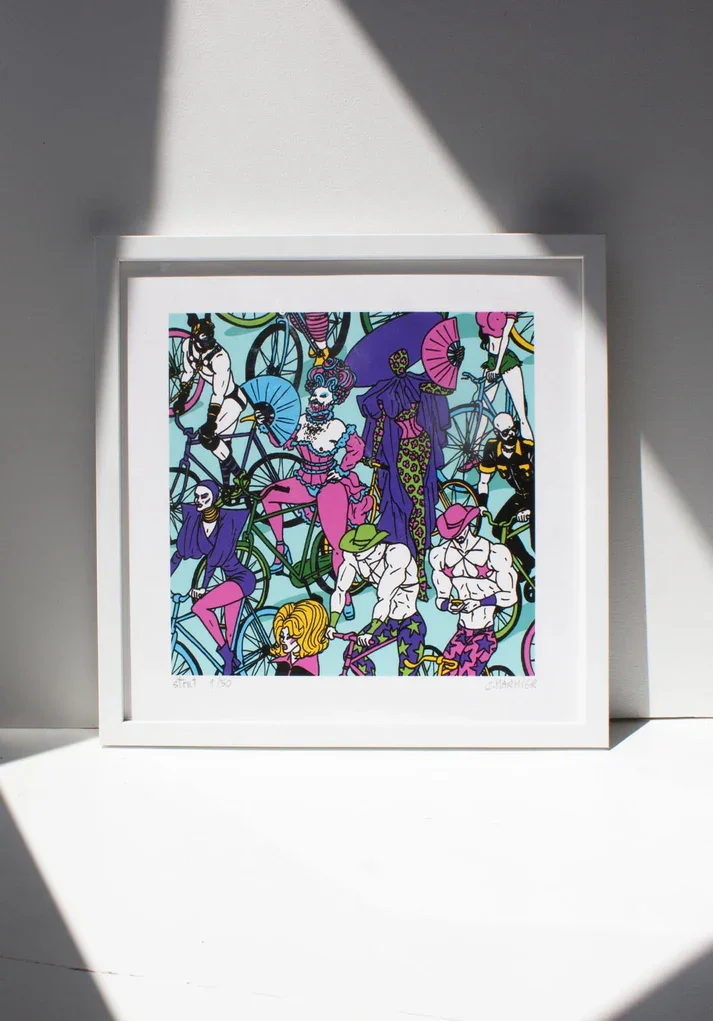
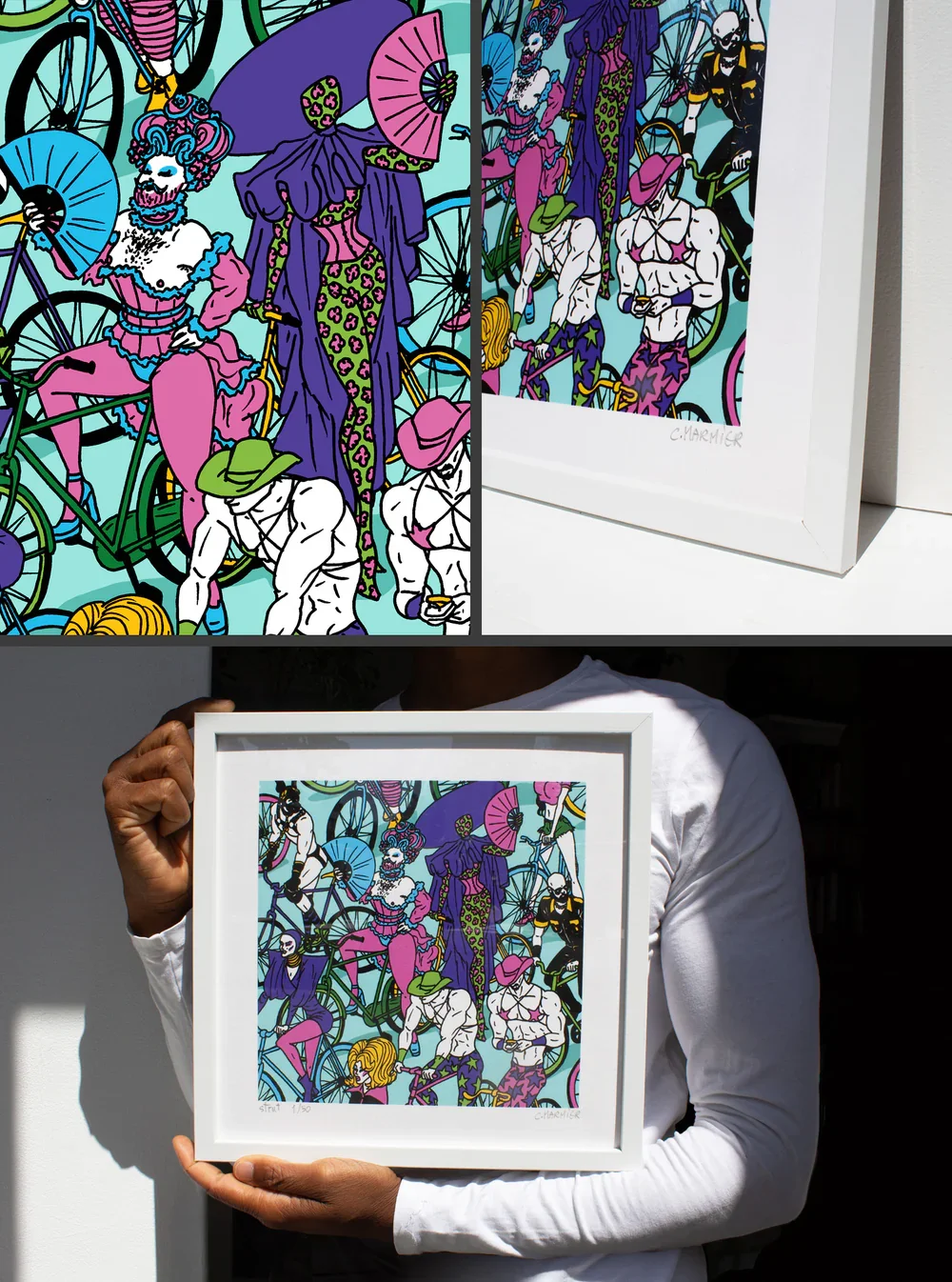
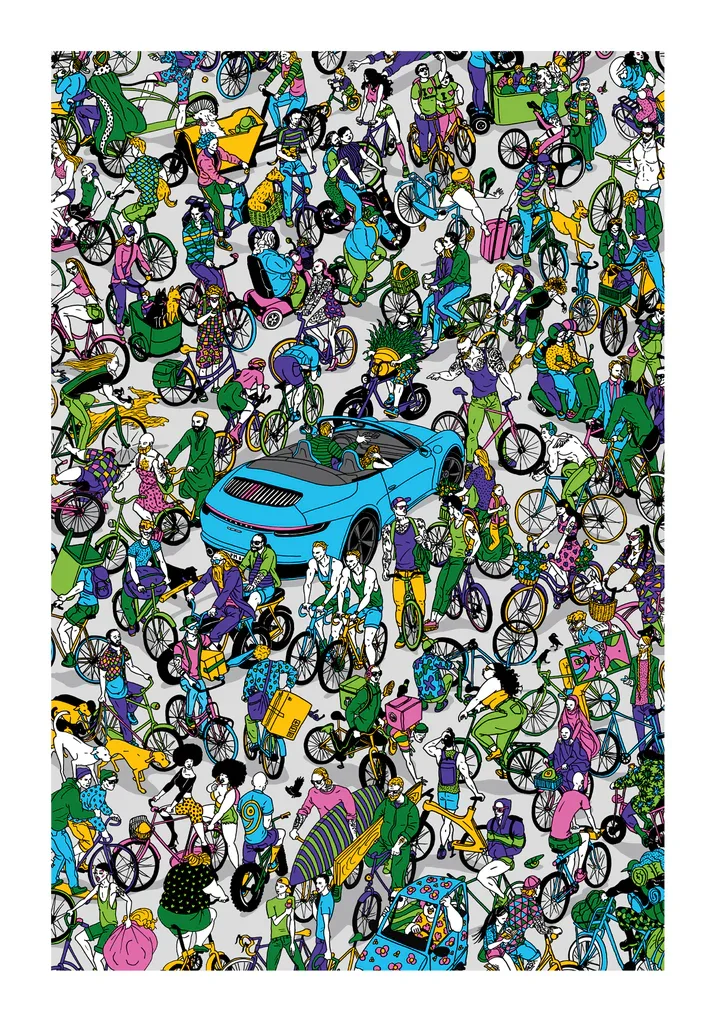
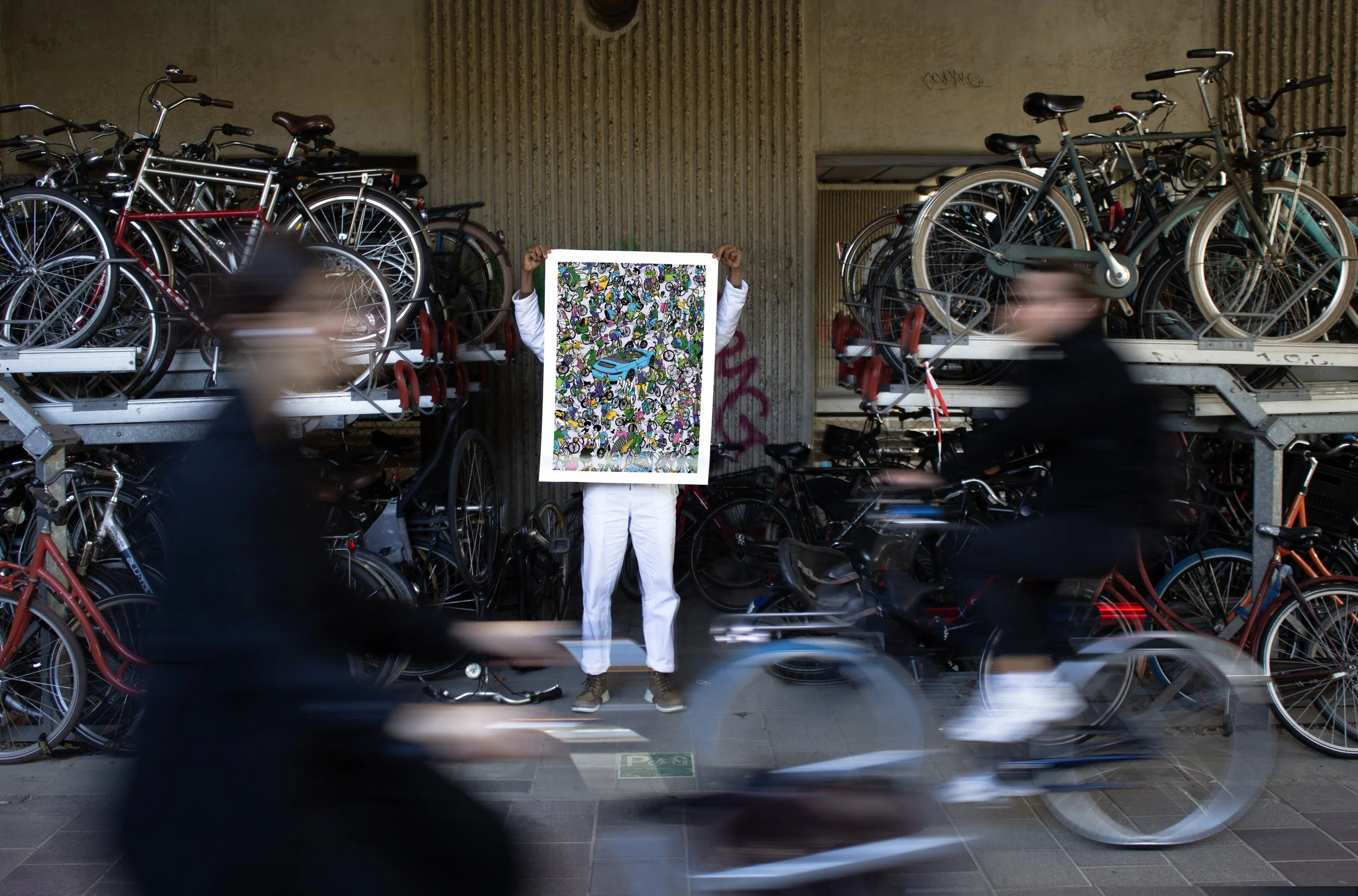
"Girl" — Chris Marmier Limited edition giclee print
She's at the wrong beach.
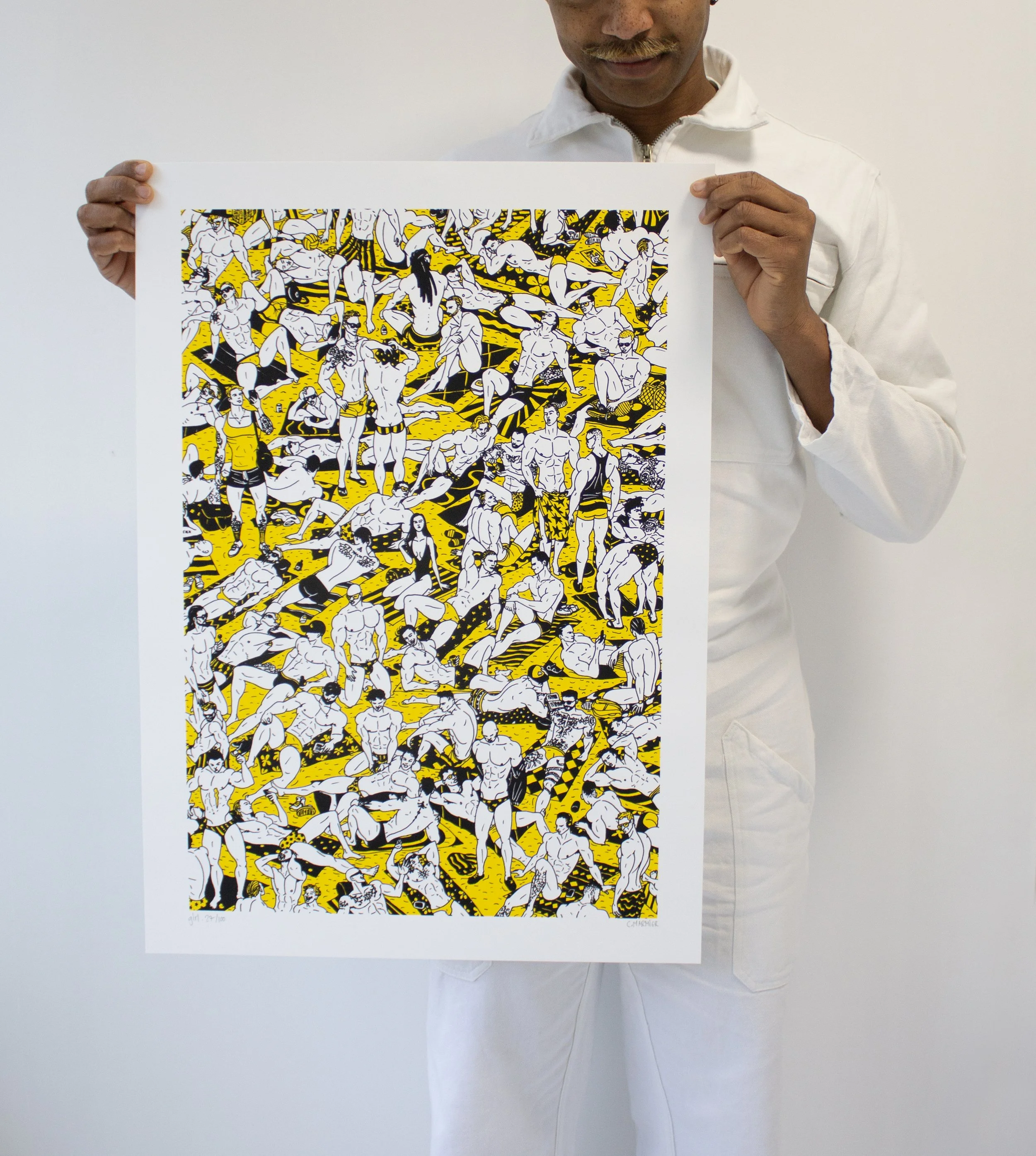
Girl packs an entire beach's worth of sculpted, preening, posing masculinity onto a single blazing yellow canvas — and somewhere among them, almost lost in the crowd, is the one the title belongs to. Unimpressed. Ignored. Absolutely done with it. It's classic Marmier: a composition that rewards patience, a joke that lands slowly, and a quietly sharp comment on how we see — and don't see — each other in spaces built around performance and body.
The palette is deliberately electric. That saturated yellow hums off the wall, throwing the bold black and white figures into sharp relief. Up close the linework is meticulous, each figure distinct, each pose its own small story. Step back and it becomes something closer to a pattern — the kind of beautiful, overwhelming chaos that Marmier finds in the city every day.
Look carefully and you might just find a familiar face. As with all his work, friends and people observed from daily life find their way into the crowd.
A bold, conversation-starting piece with more wit and warmth beneath the surface than it first lets on.
Details
50 × 70 cm (19.7" × 27.6")
Limited edition of 100
Printed on 300g fine art paper
Hand-signed and numbered by the artist
Supplied unframed
"Girl" — Chris Marmier Limited edition giclee print
She's at the wrong beach.
Girl packs an entire beach's worth of sculpted, preening, posing masculinity onto a single blazing yellow canvas — and somewhere among them, almost lost in the crowd, is the one the title belongs to. Unimpressed. Ignored. Absolutely done with it. It's classic Marmier: a composition that rewards patience, a joke that lands slowly, and a quietly sharp comment on how we see — and don't see — each other in spaces built around performance and body.
The palette is deliberately electric. That saturated yellow hums off the wall, throwing the bold black and white figures into sharp relief. Up close the linework is meticulous, each figure distinct, each pose its own small story. Step back and it becomes something closer to a pattern — the kind of beautiful, overwhelming chaos that Marmier finds in the city every day.
Look carefully and you might just find a familiar face. As with all his work, friends and people observed from daily life find their way into the crowd.
A bold, conversation-starting piece with more wit and warmth beneath the surface than it first lets on.
Details
50 × 70 cm (19.7" × 27.6")
Limited edition of 100
Printed on 300g fine art paper
Hand-signed and numbered by the artist
Supplied unframed