 Image 1 of 2
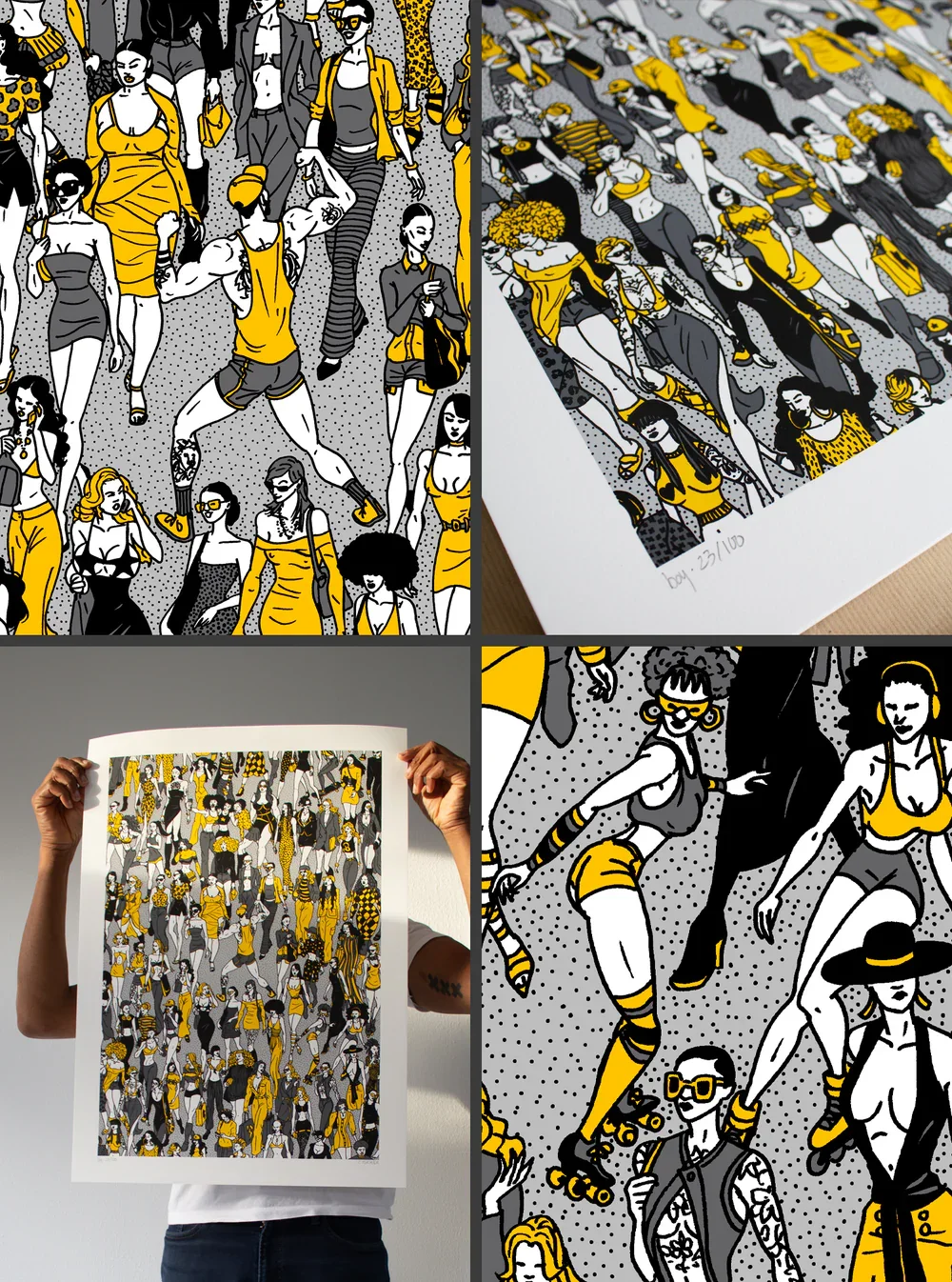 Image 2 of 2
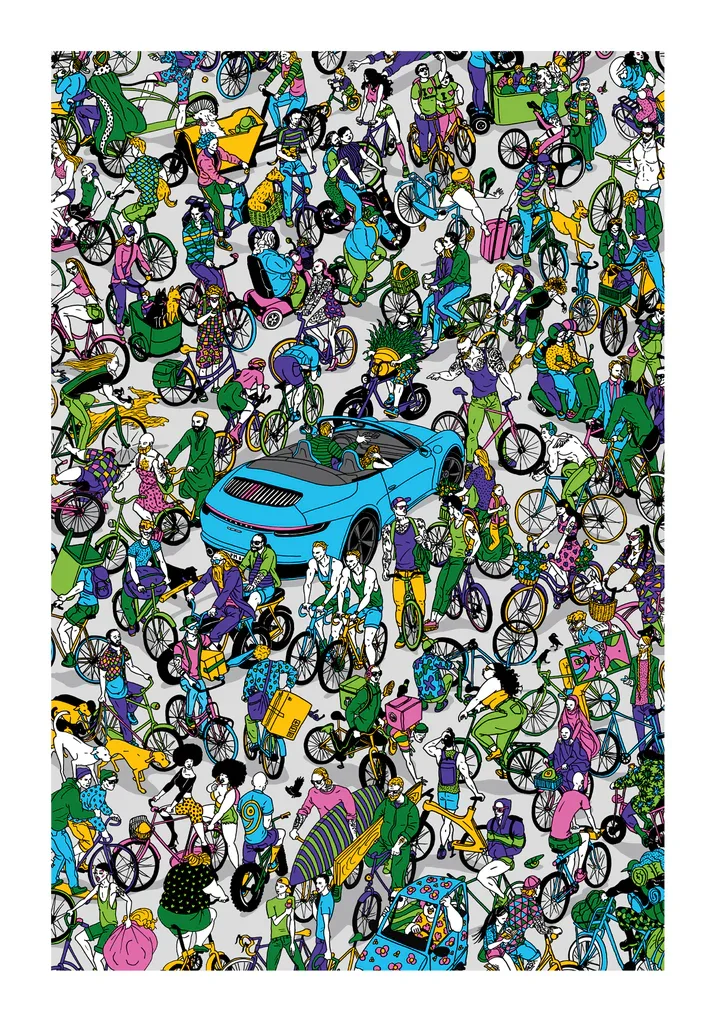
"Boy" — Chris Marmier Limited edition giclee print
He's in there somewhere. Good luck to him.
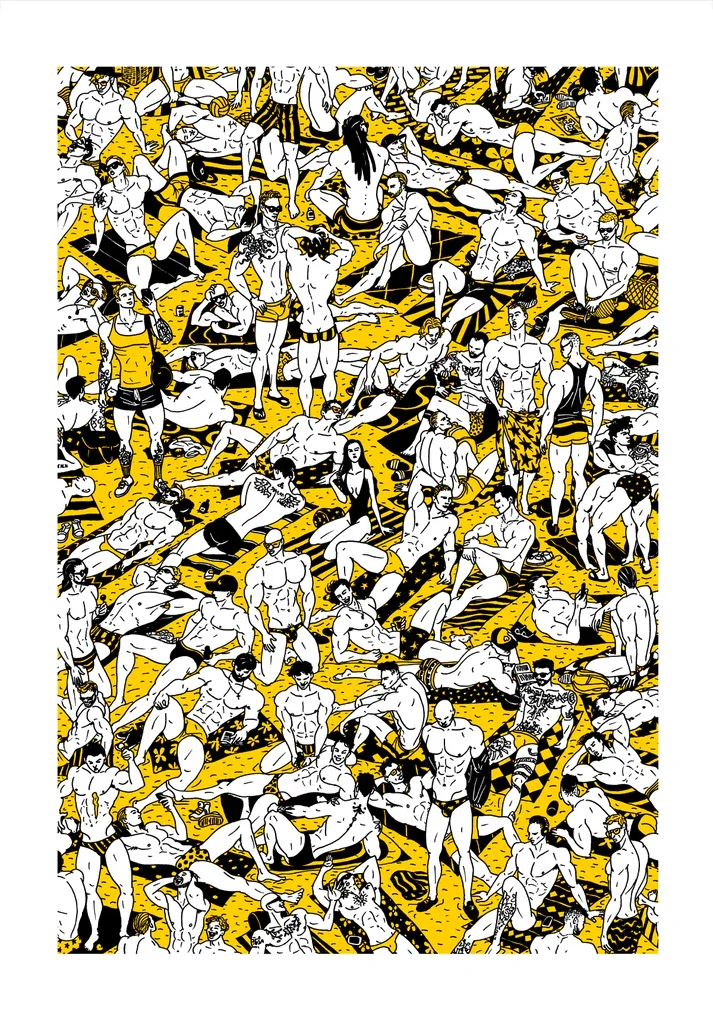
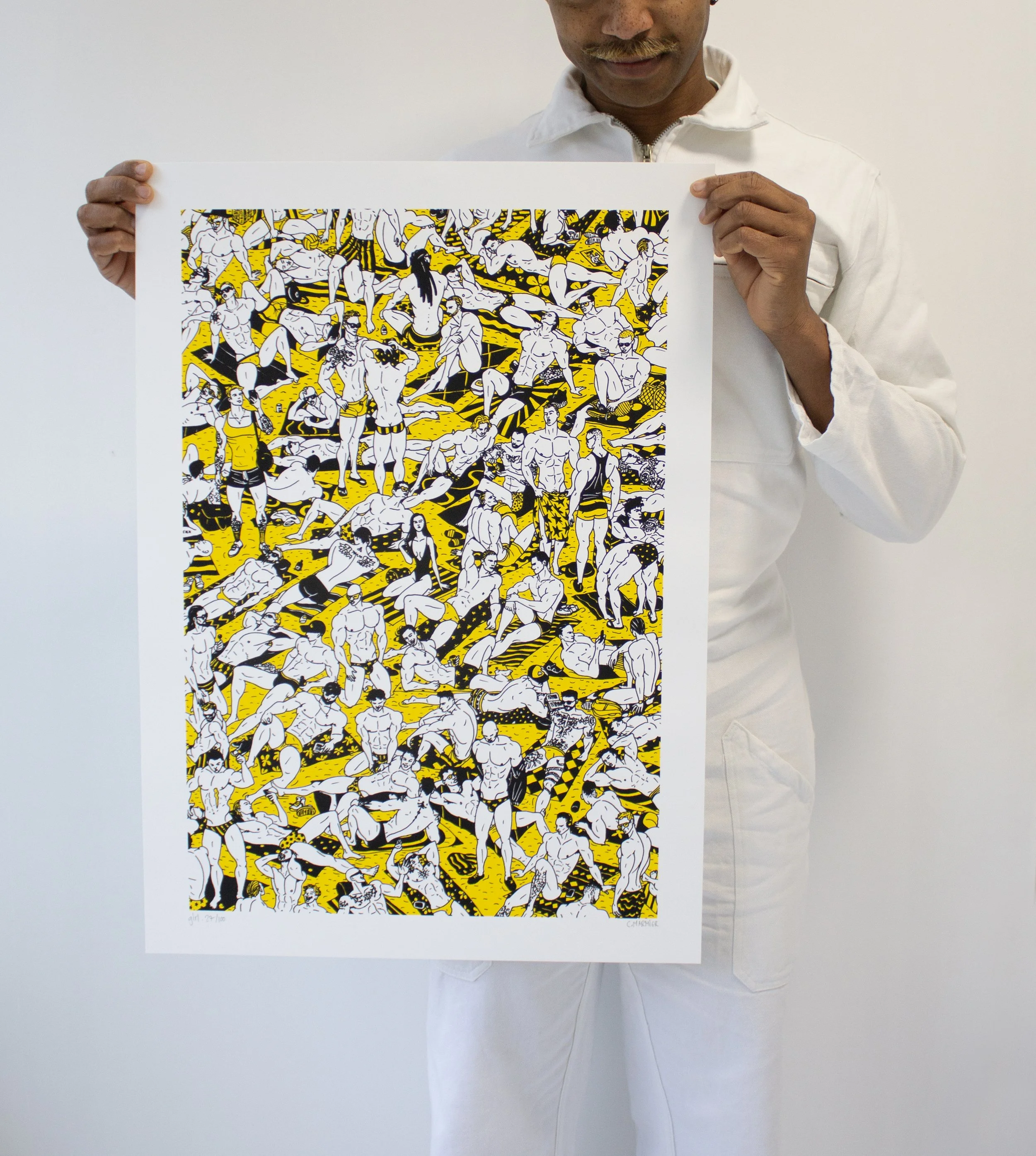
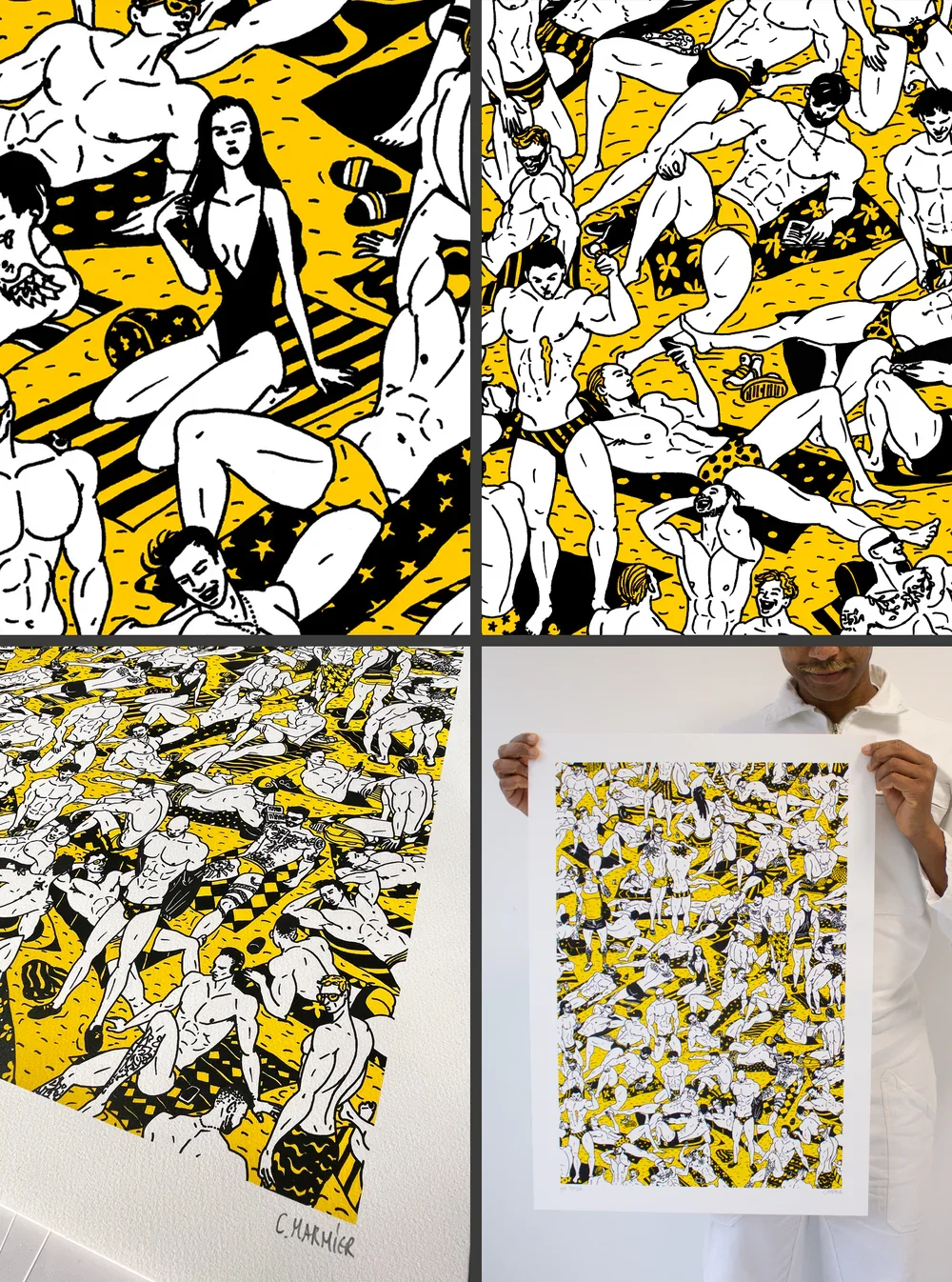
Boy is the irresistible companion piece to Girl — and the joke lands just as perfectly in reverse. Where Girl dropped one unimpressed woman into a beach full of flexing men, Boy places a single, hapless figure into a crowd of confident, unstoppable women. They stride, they strut, they own every inch of the canvas. He does not.
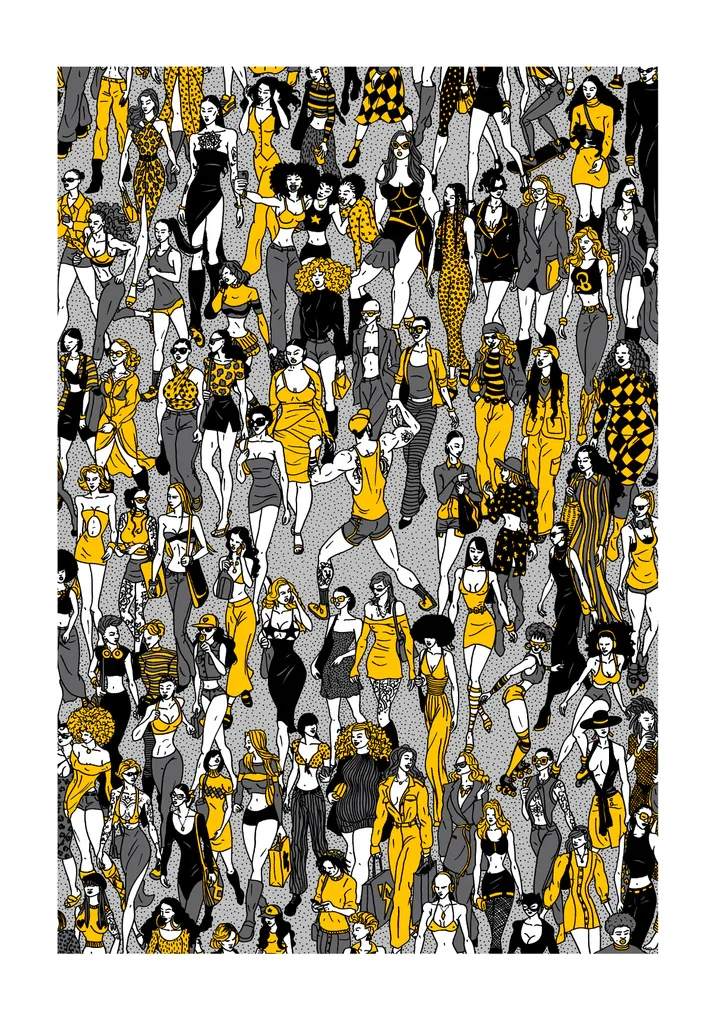
Marmier's signature yellow runs through the crowd like a current, popping against the cool grey speckled background and bold black line work. Each figure is a character in her own right: different styles, different attitudes, different stories, all moving with the kind of energy that fills a city street on a warm evening.
Look carefully and you might spot a familiar face among the crowd — friends and people from the artist's daily life have a habit of finding their way into Marmier's compositions.
Hung together, Girl and Boy are a conversation. Hung alone, Boy is more than enough.
Details
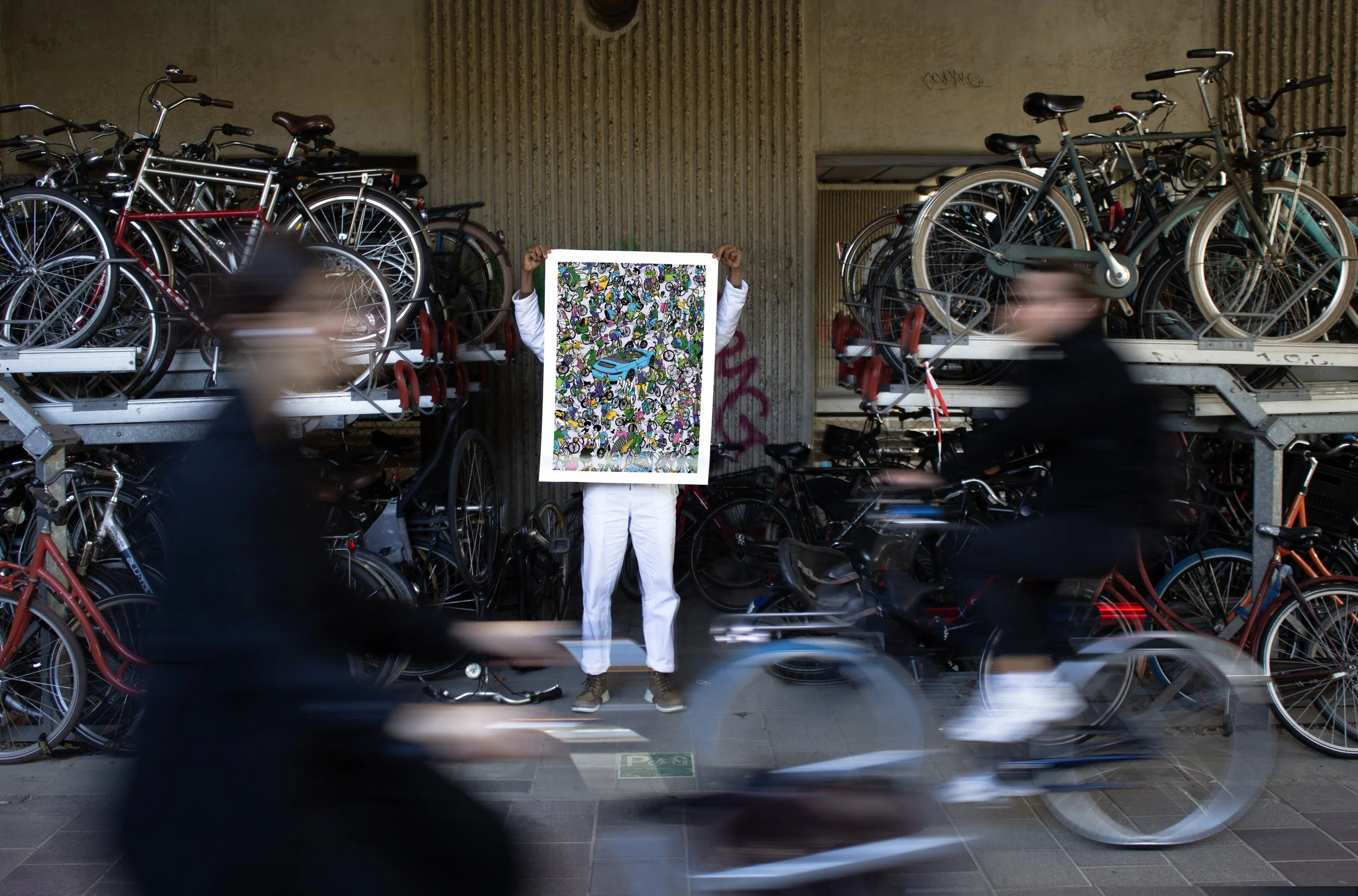
50 × 70 cm (19.7" × 27.6")
Limited edition of 100
Printed on 300g fine art paper
Hand-signed and numbered by the artist
Supplied unframed
"Boy" — Chris Marmier Limited edition giclee print
He's in there somewhere. Good luck to him.
Boy is the irresistible companion piece to Girl — and the joke lands just as perfectly in reverse. Where Girl dropped one unimpressed woman into a beach full of flexing men, Boy places a single, hapless figure into a crowd of confident, unstoppable women. They stride, they strut, they own every inch of the canvas. He does not.
Marmier's signature yellow runs through the crowd like a current, popping against the cool grey speckled background and bold black line work. Each figure is a character in her own right: different styles, different attitudes, different stories, all moving with the kind of energy that fills a city street on a warm evening.
Look carefully and you might spot a familiar face among the crowd — friends and people from the artist's daily life have a habit of finding their way into Marmier's compositions.
Hung together, Girl and Boy are a conversation. Hung alone, Boy is more than enough.
Details
50 × 70 cm (19.7" × 27.6")
Limited edition of 100
Printed on 300g fine art paper
Hand-signed and numbered by the artist
Supplied unframed