 Image 1 of 2
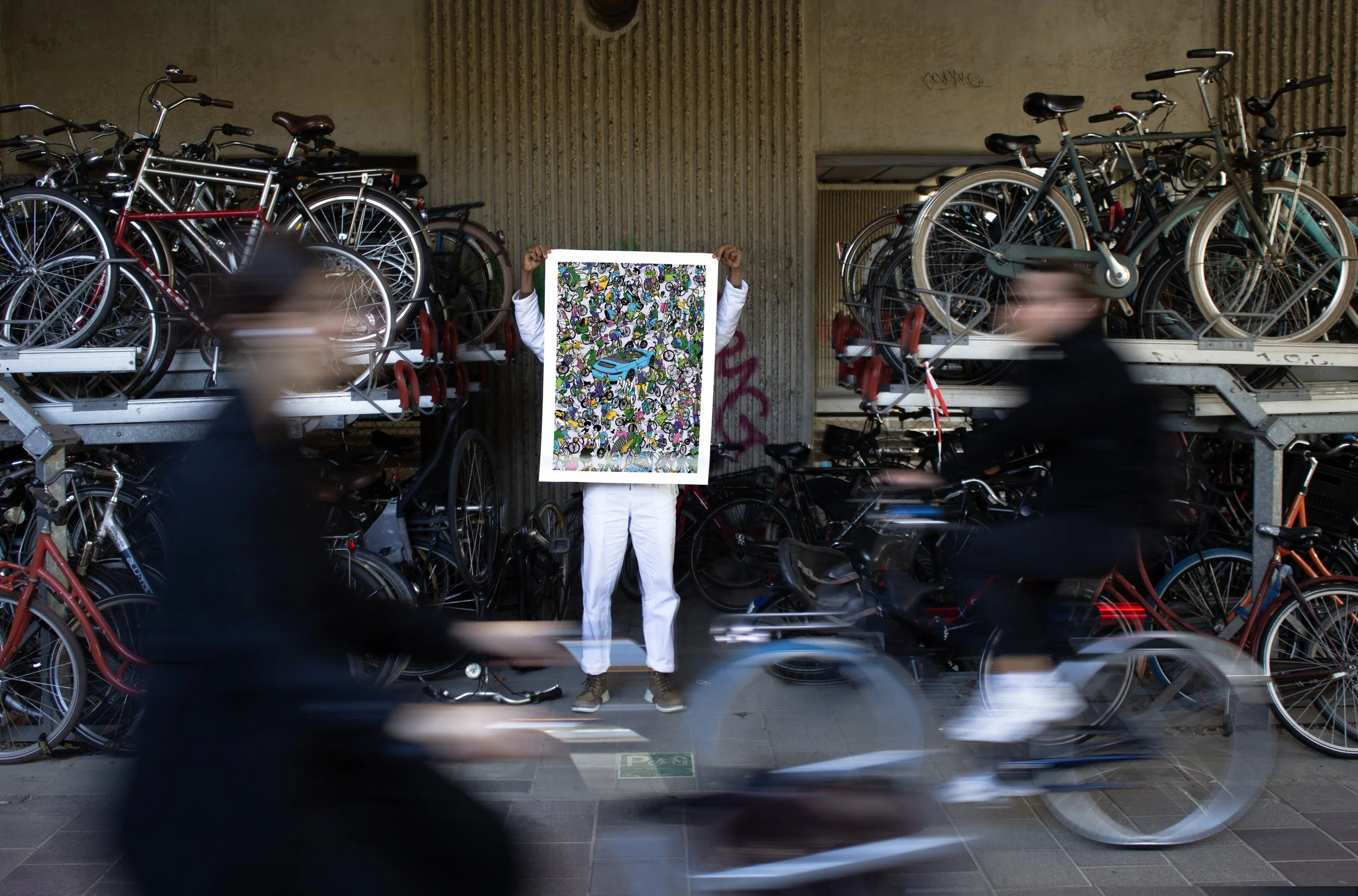 Image 2 of 2
"Priority" — Chris Marmier Limited edition giclee print
One car. Dozens of bikes. You can guess who owns the road.
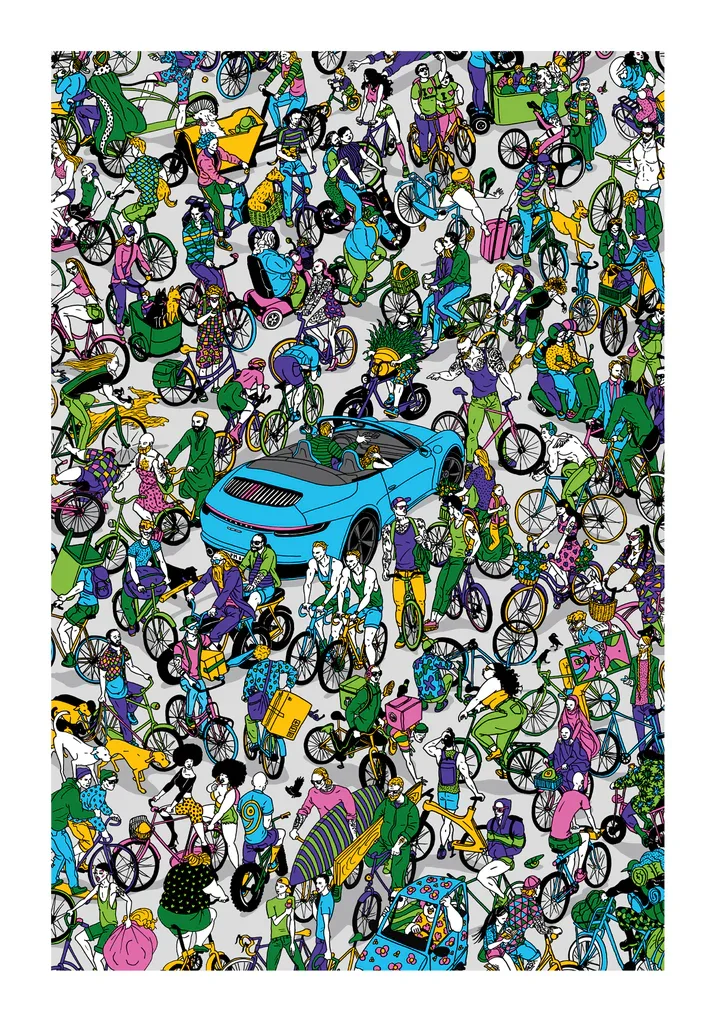
Chris Marmier's Priority is a love letter to Amsterdam told with a wink — a gleaming blue Porsche convertible marooned in an absolute flood of cyclists. Look closer and the crowd reveals itself: dogs in baskets, pineapples balanced on handlebars, colourful characters weaving and jostling through the grey. The car isn't going anywhere fast.
But beneath the chaos there's something quietly beautiful about it — the energy of a city that moves on its own terms, full of life and personality spilling in every direction. Marmier has a gift for finding that beauty in the urban everyday, and Priority captures it at its most vivid.
Look even closer and you might spot a familiar face. Marmier is known for hiding friends and the people he watches from his studio window among his crowds — each one a small, personal tribute tucked into the composition. Every viewer finds something different.
Bursting with bold lines and a joyful palette, this is a piece that makes people smile the moment they see it — and keeps them looking long after.
Each print is part of a limited edition of just 100, hand-signed and numbered by the artist. Printed on 300g fine art paper at 70 × 100 cm, it's made to fill a wall and hold its own.
Details
70 × 100 cm (27.8" × 39.4")
Limited edition of 100
Printed on 300g fine art paper
Hand-signed and numbered by the artist
Supplied unframed
"Priority" — Chris Marmier Limited edition giclee print
One car. Dozens of bikes. You can guess who owns the road.
Chris Marmier's Priority is a love letter to Amsterdam told with a wink — a gleaming blue Porsche convertible marooned in an absolute flood of cyclists. Look closer and the crowd reveals itself: dogs in baskets, pineapples balanced on handlebars, colourful characters weaving and jostling through the grey. The car isn't going anywhere fast.
But beneath the chaos there's something quietly beautiful about it — the energy of a city that moves on its own terms, full of life and personality spilling in every direction. Marmier has a gift for finding that beauty in the urban everyday, and Priority captures it at its most vivid.
Look even closer and you might spot a familiar face. Marmier is known for hiding friends and the people he watches from his studio window among his crowds — each one a small, personal tribute tucked into the composition. Every viewer finds something different.
Bursting with bold lines and a joyful palette, this is a piece that makes people smile the moment they see it — and keeps them looking long after.
Each print is part of a limited edition of just 100, hand-signed and numbered by the artist. Printed on 300g fine art paper at 70 × 100 cm, it's made to fill a wall and hold its own.
Details
70 × 100 cm (27.8" × 39.4")
Limited edition of 100
Printed on 300g fine art paper
Hand-signed and numbered by the artist
Supplied unframed